Politics
Judge Expands Lawsuit Accusing CPD of Targeting Black, Latino Chicagoans With Traffic Stops to Include All Black, Latino Drivers
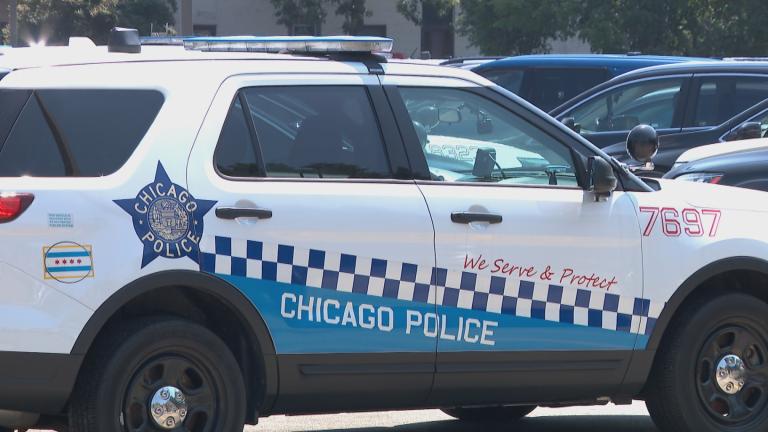
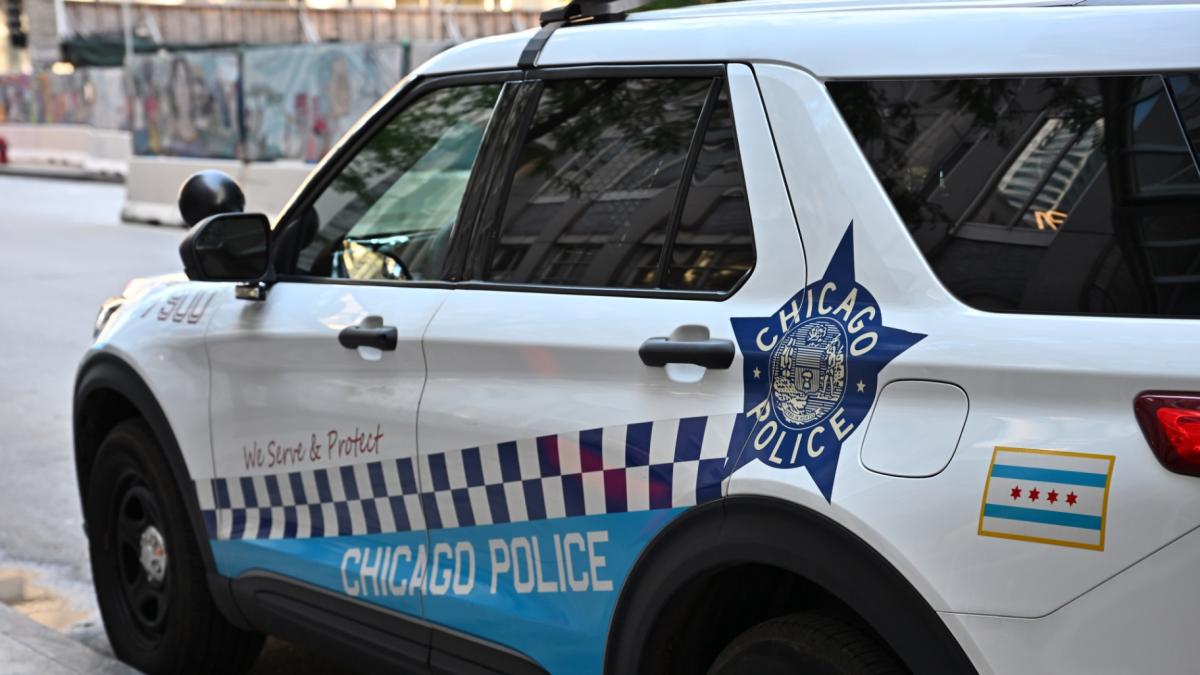 A Chicago Police Department vehicle is parked on Clark Street near Daley Plaza on June 15, 2026. (Victor Hilitski / WTTW News)
A federal judge expanded the lawsuit accusing the Chicago Police Department of targeting Black and Latino drivers with a massive campaign of traffic stops to include all Black and Latino drivers who have been pulled over in the past five years — or could be in the future, court records show.
The American Civil Liberties Union of Illinois, which sued the city three years ago on behalf of five Black and Latino Chicagoans who had been repeatedly stopped while driving, “put forth a substantial amount of evidence demonstrating that CPD disproportionately stops Black and Latino drivers relative to white drivers,” U.S. District Court Judge Mary Rowland ruled.
There is also ample evidence that suggests “Black and Latino drivers’ cars are searched at disproportionately high rates relative to white drivers, despite the evidence that shows that searches of Black and Latino drivers are less likely to result in a finding of contraband,” Rowland concluded, finding that CPD’s traffic stops targeted an “undoubtedly massive” number of Chicagoans since June 26, 2021.
Chicago taxpayers have already paid $3.4 million to defend the lawsuit that accuses the CPD of making more than 1.5 million traffic stops between 2016 and 2023 based on dubious evidence of minor violations that took direct aim at Black and Latino Chicagoans but spared White Chicagoans, according to records obtained by WTTW News through a Freedom of Information Act request.
Lawyers for the city acknowledged that officers stop and search Black and Latino drivers at disproportionate rates but argued that those stops do not violate the Fourth Amendment to the U.S. Constitution or state law, Rowland wrote.
A trial will determine whether CPD’s “mass traffic stop program” illegally discriminates on the basis of race, Rowland wrote.
A spokesperson for the city’s Law Department declined to comment on the request to certify the case as a class action when contacted by WTTW News, citing the city’s policy of not discussing pending litigation. The city’s top lawyer, Corporation Counsel Mary Richardson-Lowry, was appointed by Mayor Brandon Johnson and unanimously confirmed by the Chicago City Council.
Alexandra Block, of the American Civil Liberties Union, said the judge’s ruling makes it clear that CPD is following a “racist mass traffic stop policy.”
“There is a concerted effort by CPD to stop Black and Latino drivers as part of a centralized policy,” Block said.
Three of the lead plaintiffs have been repeatedly stopped by CPD since suing the city, court records show. One of the plaintiffs has been stopped multiple times on the West Side since the start of 2026, Block said.
Rowland’s decision to certify the lawsuit as a class action, as well as her decision to force former Chicago Police Supt. Larry Snelling to answer questions under oath about CPD’s traffic stops policy, sharply raises the stakes in the case and increases the pressure on city officials to reach a settlement to reduce the costs to taxpayers.
CPD officials reported making 224,846 traffic stops to state officials in 2025, as well as 267,240 additional traffic stops they did not report to state officials. A high-ranking Chicago Police Department official told alderpeople nearly a year ago that officials were working to “fix” the “discrepancy.”
Rowland said lawyers for the five Chicagoans suing the city had obtained “numerous emails and internal memos indicate that CPD leaders admonish officers for failing to make a sufficient number of stops.”
State law bans law enforcement agencies from requiring officers to make a certain number of traffic stops. The department does not “utilize quotas” for traffic stops, according to a CPD spokesperson.
The number of traffic stops conducted by Chicago police officers surged 600% between 2015 and 2022, after CPD officials agreed to curtail the use of stop-and-frisk as part of an agreement with the ACLU after the civil rights organization released a report in March 2015 that found officers stopped Black Chicagoans at a far higher rate than Latino or White Chicagoans.
The department’s use of traffic stops is the latest chapter in the department’s “long and sordid history” of racist discrimination, according to the ACLU.
Lawyers for the city acknowledged to Rowland that CPD staff “were encouraged to increase traffic missions and enforcement in an effort to reduce violent crime” not to enforce traffic laws, according to Rowland’s ruling.
That effort included CPD launching traffic missions in “particular times and locations in areas of high crime,” often in neighborhoods where a majority of residents are Black and Latino, according to Rowland’s ruling.
Rowland’s ruling, cited the findings of a study commissioned by the ACLU that examined the difference in how CPD uses traffic stops in Chicago’s neighborhoods.
“In Streeterville, a predominantly white neighborhood, CPD reported 19 stops per year per 1,000 residents,” Rowland wrote. “By contrast, in Auburn Gresham, a neighborhood that is 96% Black or Latino, CPD reported 193 traffic stops per 1,000 residents. That represents a per-capita rate of traffic stops that is 9 times higher than Streeterville’s,” Rowland wrote, citing the study by Dean Knox, the co-leader of the Research on Policing Reform and Accountability research group at Princeton University.
Rowland also cited Knox’s finding that Black and Latino drivers who were the subject of a traffic stop were between two and nearly seven times as likely to be searched as White drivers subjected to a traffic stop between 2014 and 2024, even though searches of Black and Latino drivers were significantly less likely to lead to the discovery of guns or illegal drugs than searches of White drivers.
Just 4.5% of CPD traffic stops in 2024 led to an arrest, while approximately 8.6% of stops led to a citation, according to department data.
A gun was recovered in 0.75% of traffic stops in 2024, according to department data.
Traffic stops have long been a flashpoint in the half-dozen serious efforts to reform CPD since they put officers in close contact with Chicagoans, often under tense circumstances.
Officer Enrique Martinez was killed during a traffic stop in November, and Officer Ella French was killed during a traffic stop in August 2021.
During a March 2024 traffic stop, four officers fired 96 shots in 41 seconds at Dexter Reed, hitting him 13 times, shortly after he shot and wounded an officer, according to a preliminary investigation by the Civilian Office of Police Accountability. Reed had been stopped on suspicion for failing to wear a seat belt, according to COPA’s preliminary investigation.
After Reed’s killing more than two years ago, Snelling agreed to expand the consent decree to include traffic stops.
CPD leaders, city officials and the attorney general’s office have been negotiating behind closed doors for more than a year over whether CPD officers should be banned from making traffic stops based on minor registration or equipment violations that are designed to find evidence of “unrelated” crimes.
Snelling said in April 2025 that police officers must be allowed to continue stopping drivers for improper or expired registration plates or stickers and headlight, taillight and license plate light offenses to ensure that Chicago’s streets do not become more “dangerous for everyone who are driving.”
CPD’s policy acknowledges those stops are designed to find evidence of “unrelated” crimes.
However, the Community Commission for Public Safety and Accountability endorsed a policy in April 2025 to ban those stops in most cases, finding they “do more harm than good.”
No public progress on finalizing that policy has been announced.
WTTW News coverage of policing and police reform is supported by The Joyce Foundation.
Contact Heather Cherone: @HeatherCherone | (773) 569-1863 | [email protected]